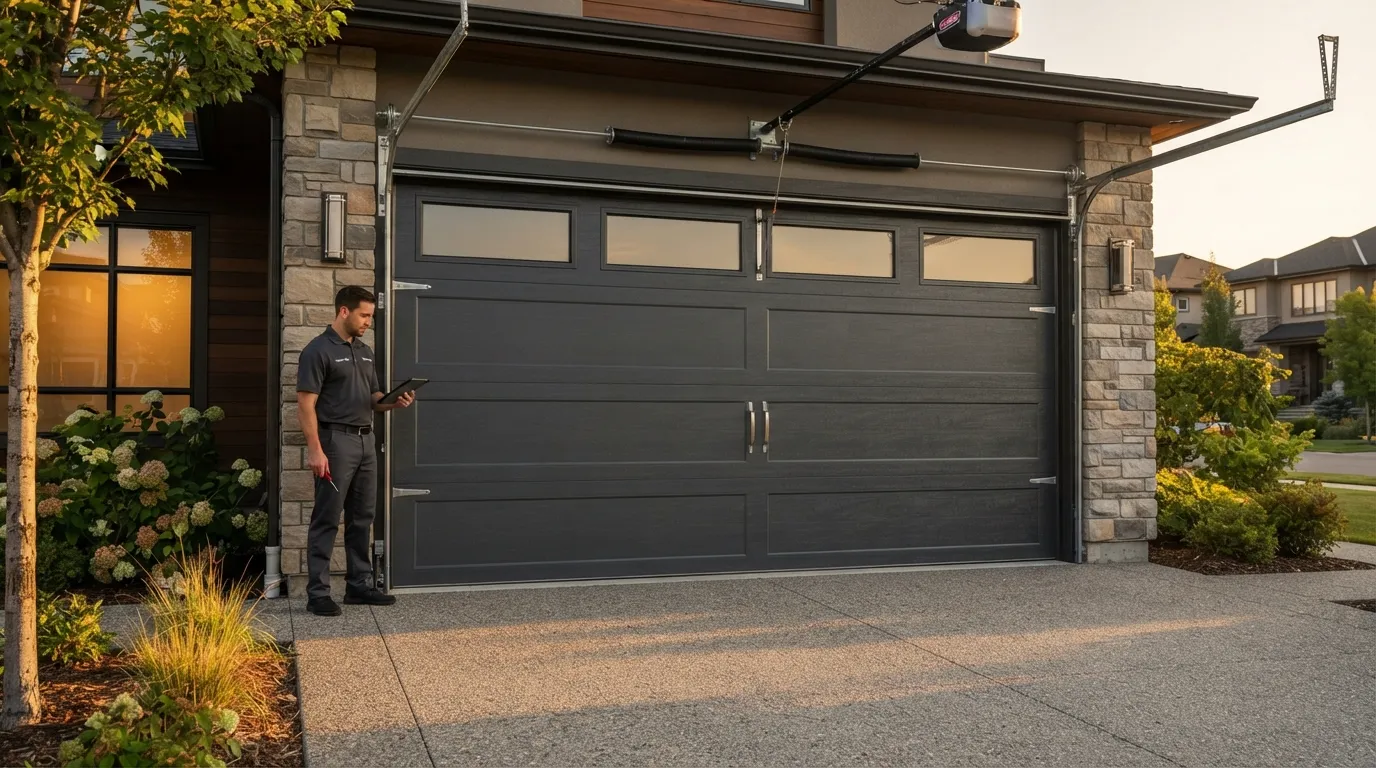
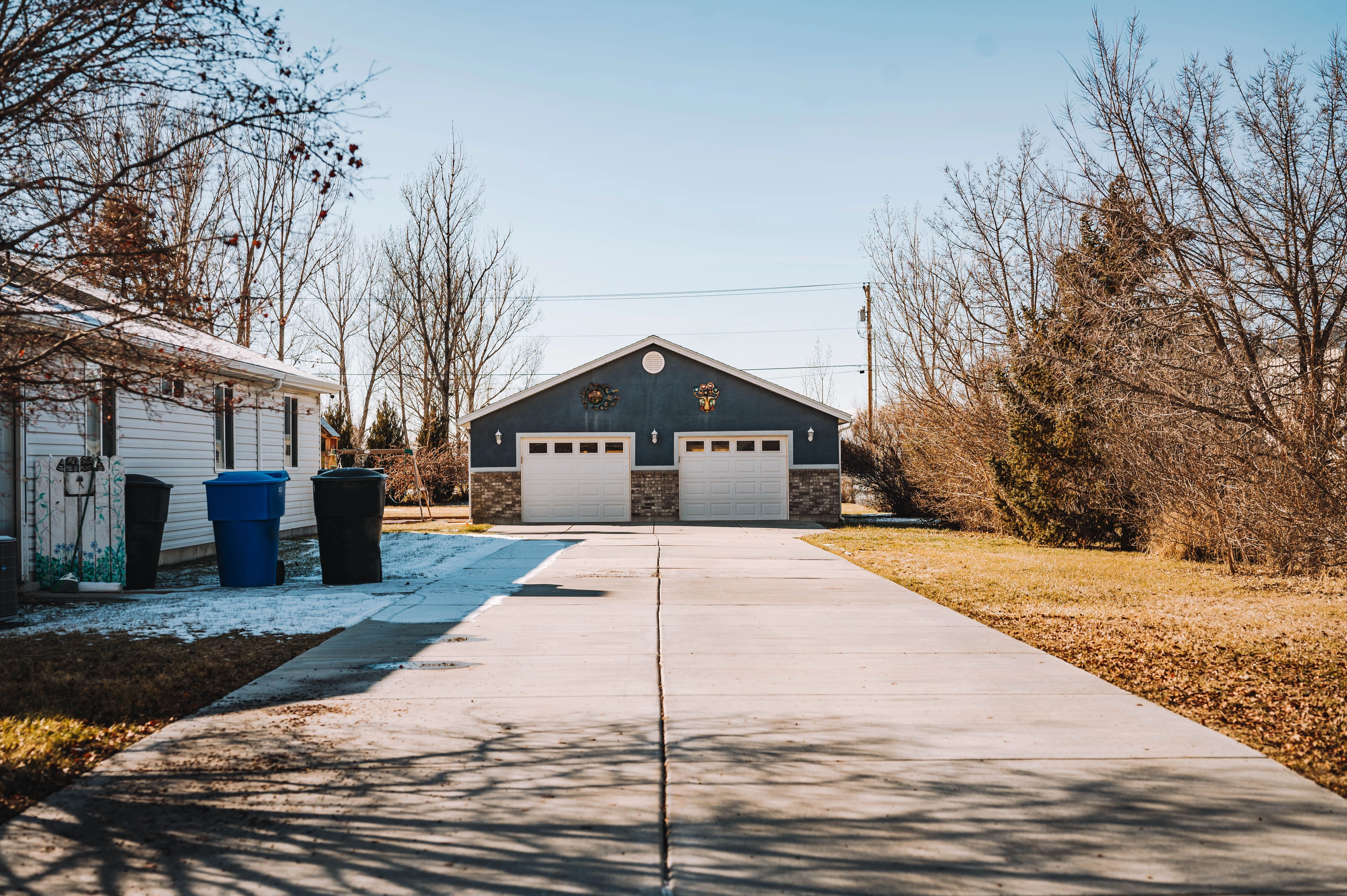
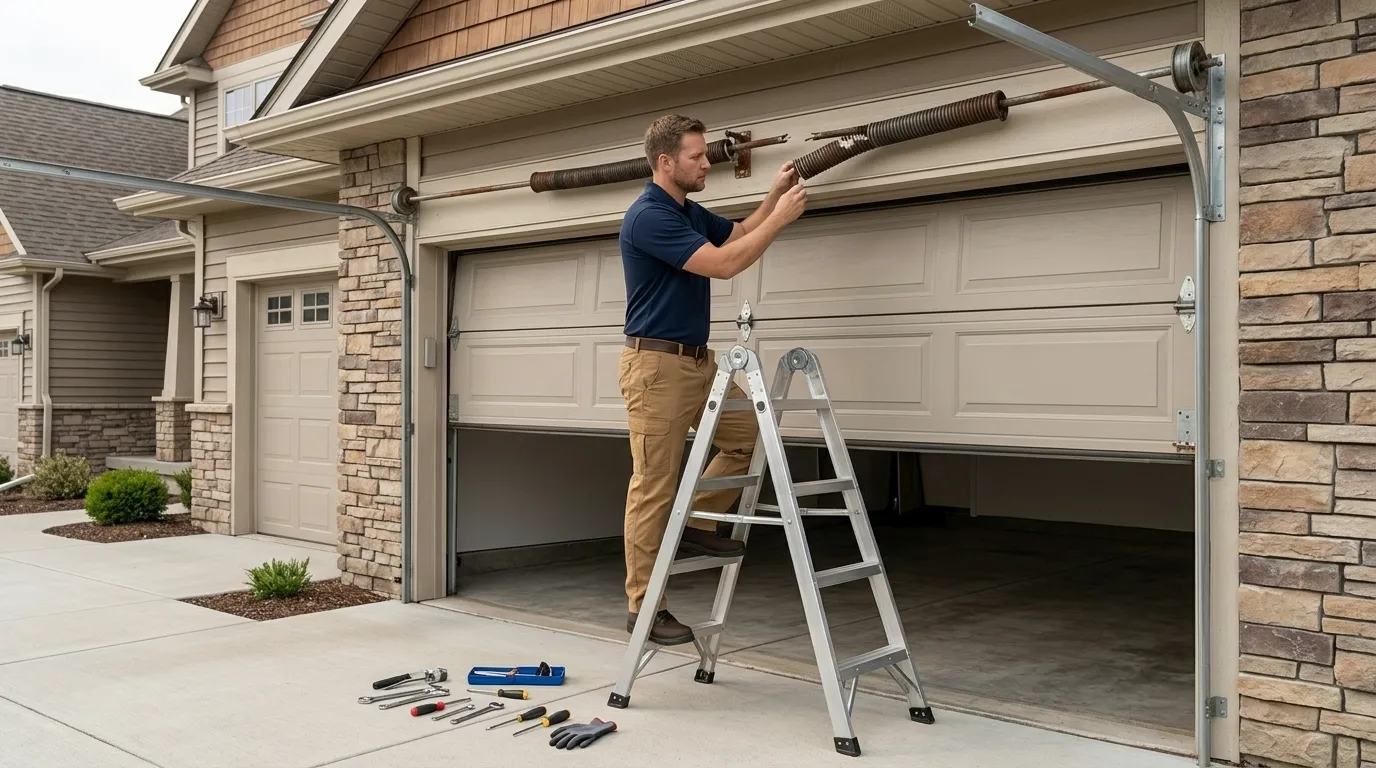
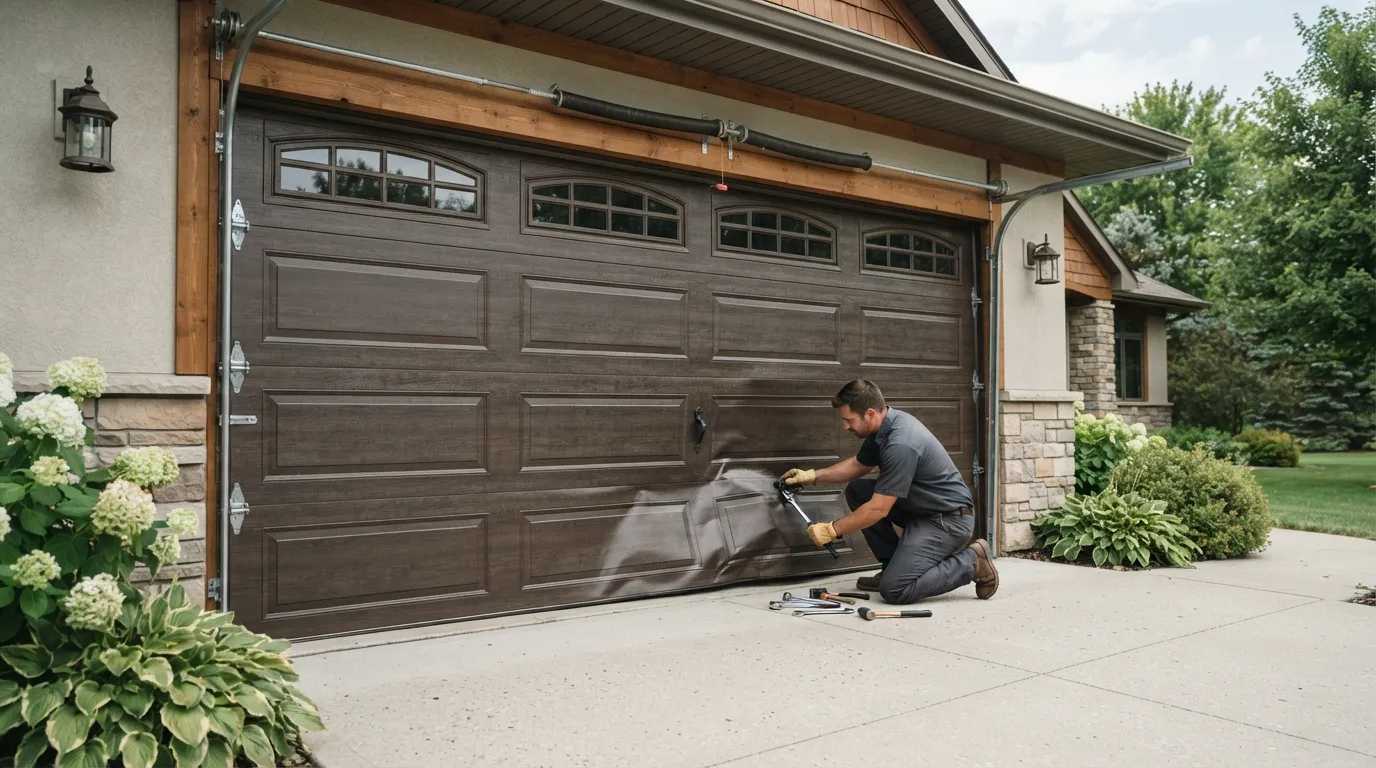
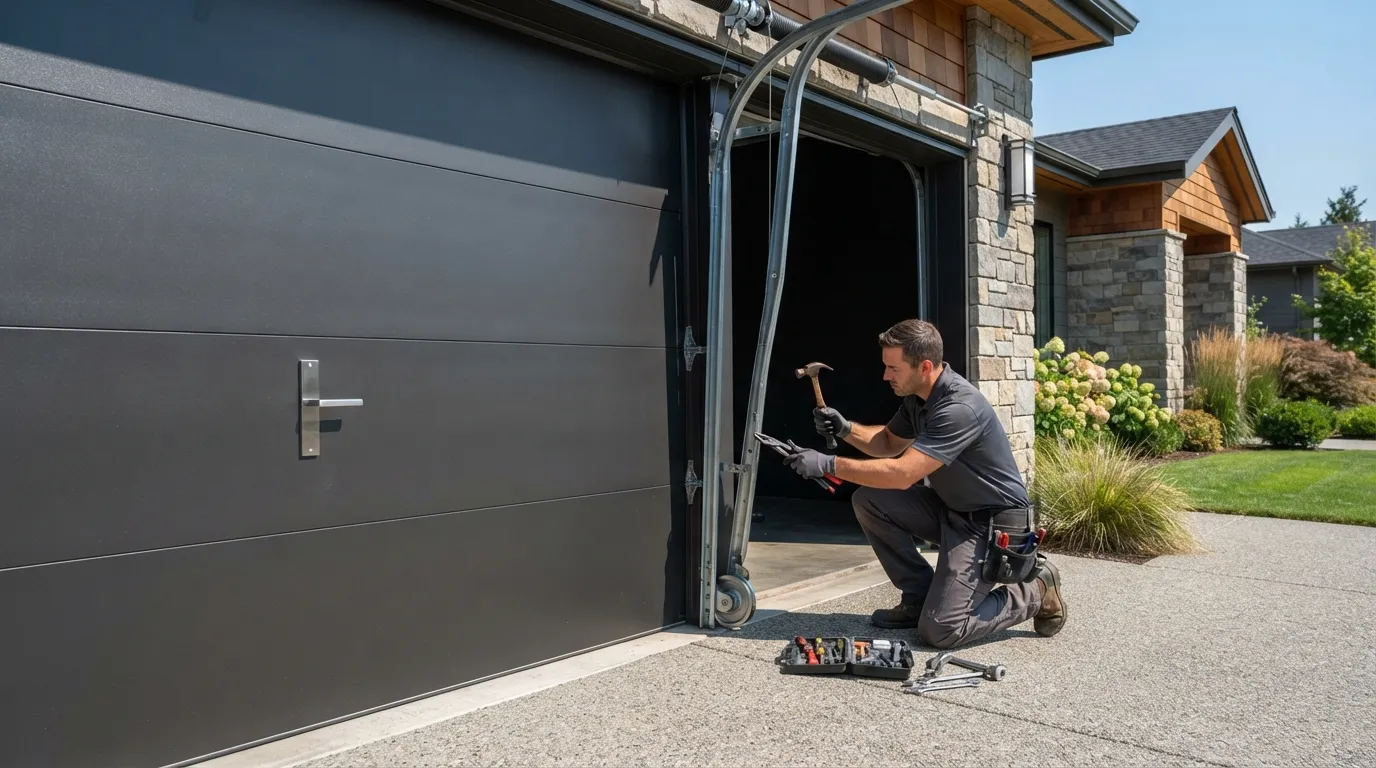
Two things drive replacement timing here more than anything else: the age of the housing stock and the heat. With most homes across the area dating to the 1980s and 90s, a big chunk of the original garage doors are hitting the point where steel skins delaminate from foam backing and torsion springs are on their second or third replacement cycle - at which point the door itself, not just the spring, is the weak link. On top of that, this is a moderate-heat climate band, and a garage that faces west or sits against an unshaded slab runs hot enough, day after day, to soften old adhesive and warp thin-gauge panels faster than the same door would age somewhere cooler. Put an aging door on a hot slab and the failure shows up as a warped panel or a track that's pulled loose from expansion and contraction, not as one dramatic breakdown. That's why installation work here skews toward doors that have simply worn out on schedule, rather than storm damage or a single accident - the house did exactly what a 1990s house does, for exactly as long as that generation of door was built to last.